A 30+ Hour Continuing Education Course in Tea
The Study of Tea is a continuing tea education course for students who want to understand the true depth and complexity of tea: why a tea looks, smells, tastes, and behaves the way it does.
The six families of Camellia sinensis — white, yellow, green, oolong, black, and dark tea — form the spine of the course. Within each family, we explore cultivar, geography, terroir, processing, history, culture, provenance, and sensory evaluation, allowing students to understand tea not as a set of categories to memorize, but as a living expression of plant, place, craft, and tradition.
Guided by Adrienne Etkin, Tea Educator and Cultural Guide, the course moves between focused evening seminars and immersive Saturday laboratories. Students will taste extensively, work comparatively, examine leaf and liquor, explore processing and regional traditions, and develop a more precise and informed understanding of quality, origin, and style.
This is a deeper course of study for those ready to move beyond familiarity with tea and begin asking better questions: What plant material are we looking at? Where was it grown? What happened to the leaf? How did culture and history shape the style? What can we understand from the cup, and what can we not know without provenance?
At its essence, The Study of Tea is about learning how to see tea more clearly.
Course Schedule | Fall 2026
Tuesday, October 13 · The Framework of Tea · 6:30–8:30 PM
We begin with the foundations of serious tea study: Camellia sinensis, sensory observation, dry and infused leaf, liquor, tasting vocabulary, and the relationships between plant, process, place, and cup.
Tuesday, October 20 · Green Tea · 6:30–8:30 PM
An exploration of green tea through China and Japan, including cultivar, terroir, harvest, fixation, steaming, pan-firing, shaping, preparation, regional traditions, and sensory character.
Tuesday, October 27 · White + Yellow Tea · 6:30–8:30 PM
We examine withering, drying, yellowing, plucking standards, cultivar, Fujian tea traditions, regional styles, freshness, aging, and the remarkable complexity found within lightly transformed teas.
Saturday, November 7 · Lab I: Leaf, Water + Sensory · 10:30 AM–2:30 PM
A four-hour hands-on laboratory exploring brewing variables, water, temperature, ratio, vessel, extraction, comparative tasting, sensory calibration, and close examination of leaf and liquor.
Tuesday, November 10 · Oolong Tea · 6:30–8:30 PM
We travel through Anxi, Wuyi, Phoenix Mountain, and Taiwan while exploring cultivar, oxidation, bruising, shaping, roasting, resting, terroir, regional tea culture, and the extraordinary diversity within the oolong family.
Tuesday, November 17 · Black Tea · 6:30–8:30 PM
Black tea is studied through China, Taiwan, the Himalayas, India, and Sri Lanka, examining oxidation, season, cultivar, manufacture, geography, history, trade, and radically different regional expressions.
Saturday, November 21 · Lab II: Oxidation, Roast + Regional Style · 10:30 AM–2:30 PM
Through intensive comparative tasting, we investigate oxidation, fixation, roast, cultivar, and place — learning to recognize how production choices and regional traditions reveal themselves in the cup.
Tuesday, December 1 · Dark Tea + Pu’er · 6:30–8:30 PM
An exploration of Yunnan, sheng and shu Pu’er, hei cha, maocha, microbial transformation, compression, storage, aging, tea mountains, provenance, and the continuing transformation of tea over time.
Tuesday, December 8 · Tea in Place · 6:30–8:30 PM
Terroir, geography, history, culture, and provenance come together as we ask a larger question: what does origin actually mean in tea? We examine how land, cultivar, maker, trade, tradition, and human decision all contribute to identity in the cup.
Saturday, December 12 · Lab III: Time, Provenance + Evaluation · 10:30 AM–2:30 PM
A four-hour study of aging, storage, roast and rest, comparative evaluation, quality, faults, and provenance. Students begin working more independently and critically with the teas in front of them.
Tuesday, December 15 · Quality + Discernment · 6:30–8:30 PM
What makes a tea good? We explore quality versus preference, sourcing, grading, authenticity, value, marketing language, origin claims, and the limits of what sensory evaluation alone can tell us.
Saturday, December 19 · Lab IV: Final Tea Study Practicum · 10:30 AM–2:30 PM
The course culminates in an independent tea study. Students observe, prepare, taste, evaluate, and interpret an unfamiliar tea using the methods developed throughout the course, followed by provenance reveal, discussion, and a closing tea.
What You’ll Experience
Study of all six families of Camellia sinensis
Guided comparative tastings throughout the course
Exploration of cultivar, geography, terroir, harvest, and season
Tea processing from leaf to finished tea
Regional tea histories and cultural traditions
Sensory evaluation and development of tasting vocabulary
Study of oxidation, roasting, aging, storage, and microbial transformation
Provenance, sourcing, grading, authenticity, and quality
Four intensive hands-on tea laboratories
Independent tea study and final practicum
A curated 25-tea Study Library for continued work at home
A complete The Study of Tea textbook
Tea Study Journal and course materials
The Tea Study Library
Tea is part of the curriculum.
Each student receives a curated library of 25 numbered study teas, selected specifically to demonstrate tea family, cultivar, geography, processing, regional style, roast, age, and provenance.
The teas are intended to be revisited throughout the course rather than tasted only once. Students will use them for guided assignments, comparative study, and independent practice between sessions.
All course teas and study teas are included in tuition.
Who May Enroll
The Study of Tea is designed as continuing tea education.
The course is open to all graduates of Tea as Ritual and previous participants of Art of the Divine Leaf.
Tea professionals, educators, serious tea students, and practitioners with comparable prior experience may also apply. Admission for students entering outside of these programs is by Adrienne’s approval following a brief conversation to ensure that the course is the appropriate next step in their tea study.
Details
Format: Eight 2-hour Tuesday seminars and four 4-hour Saturday laboratories
Live Instruction: 32 hours
Course Dates: October 13 through December 19, 2026
Tuesday Seminars: 6:30–8:30 PM
Saturday Laboratories: 10:30 AM–2:30 PM
Capacity: Limited to 7 students
Tuition: $995
Tea Circle Member Tuition: $796 | 20% off
Location: Admari | Modern Tea Merchants · Little River, Miami
Included: All course teas, 25-tea Study Library, course textbook, Tea Study Journal, seminars, laboratories, and final practicum.
Registration
Enrollment is intentionally limited to seven students.
A $300 non-refundable deposit secures your place in the Fall 2026 cohort and is applied directly toward tuition.
Public Tuition:
$300 deposit + $695 remaining balance
Tea Circle Member Tuition (contact us for your discount code)
$300 deposit + $496 remaining balance
The remaining balance is due October 1st.
Students applying with outside tea experience need to meet with Adrienne for course approval before placing a deposit.
Friday Study Time
Throughout the course, students are welcome to use the Friday Members’ Lounge as a place to study, taste, and practice between sessions. Bring your Tea Study Library, revisit your notes, and use the studio to deepen the work at your own pace.
Please note: This is a cohort-based course of study. Each seminar and laboratory builds upon the work that comes before it, and students are expected to participate fully throughout the program.
RESERVE YOUR SEAT | $300
A 30+ Hour Continuing Education Course in Tea
The Study of Tea is a continuing tea education course for students who want to understand the true depth and complexity of tea: why a tea looks, smells, tastes, and behaves the way it does.
The six families of Camellia sinensis — white, yellow, green, oolong, black, and dark tea — form the spine of the course. Within each family, we explore cultivar, geography, terroir, processing, history, culture, provenance, and sensory evaluation, allowing students to understand tea not as a set of categories to memorize, but as a living expression of plant, place, craft, and tradition.
Guided by Adrienne Etkin, Tea Educator and Cultural Guide, the course moves between focused evening seminars and immersive Saturday laboratories. Students will taste extensively, work comparatively, examine leaf and liquor, explore processing and regional traditions, and develop a more precise and informed understanding of quality, origin, and style.
This is a deeper course of study for those ready to move beyond familiarity with tea and begin asking better questions: What plant material are we looking at? Where was it grown? What happened to the leaf? How did culture and history shape the style? What can we understand from the cup, and what can we not know without provenance?
At its essence, The Study of Tea is about learning how to see tea more clearly.
Course Schedule | Fall 2026
Tuesday, October 13 · The Framework of Tea · 6:30–8:30 PM
We begin with the foundations of serious tea study: Camellia sinensis, sensory observation, dry and infused leaf, liquor, tasting vocabulary, and the relationships between plant, process, place, and cup.
Tuesday, October 20 · Green Tea · 6:30–8:30 PM
An exploration of green tea through China and Japan, including cultivar, terroir, harvest, fixation, steaming, pan-firing, shaping, preparation, regional traditions, and sensory character.
Tuesday, October 27 · White + Yellow Tea · 6:30–8:30 PM
We examine withering, drying, yellowing, plucking standards, cultivar, Fujian tea traditions, regional styles, freshness, aging, and the remarkable complexity found within lightly transformed teas.
Saturday, November 7 · Lab I: Leaf, Water + Sensory · 10:30 AM–2:30 PM
A four-hour hands-on laboratory exploring brewing variables, water, temperature, ratio, vessel, extraction, comparative tasting, sensory calibration, and close examination of leaf and liquor.
Tuesday, November 10 · Oolong Tea · 6:30–8:30 PM
We travel through Anxi, Wuyi, Phoenix Mountain, and Taiwan while exploring cultivar, oxidation, bruising, shaping, roasting, resting, terroir, regional tea culture, and the extraordinary diversity within the oolong family.
Tuesday, November 17 · Black Tea · 6:30–8:30 PM
Black tea is studied through China, Taiwan, the Himalayas, India, and Sri Lanka, examining oxidation, season, cultivar, manufacture, geography, history, trade, and radically different regional expressions.
Saturday, November 21 · Lab II: Oxidation, Roast + Regional Style · 10:30 AM–2:30 PM
Through intensive comparative tasting, we investigate oxidation, fixation, roast, cultivar, and place — learning to recognize how production choices and regional traditions reveal themselves in the cup.
Tuesday, December 1 · Dark Tea + Pu’er · 6:30–8:30 PM
An exploration of Yunnan, sheng and shu Pu’er, hei cha, maocha, microbial transformation, compression, storage, aging, tea mountains, provenance, and the continuing transformation of tea over time.
Tuesday, December 8 · Tea in Place · 6:30–8:30 PM
Terroir, geography, history, culture, and provenance come together as we ask a larger question: what does origin actually mean in tea? We examine how land, cultivar, maker, trade, tradition, and human decision all contribute to identity in the cup.
Saturday, December 12 · Lab III: Time, Provenance + Evaluation · 10:30 AM–2:30 PM
A four-hour study of aging, storage, roast and rest, comparative evaluation, quality, faults, and provenance. Students begin working more independently and critically with the teas in front of them.
Tuesday, December 15 · Quality + Discernment · 6:30–8:30 PM
What makes a tea good? We explore quality versus preference, sourcing, grading, authenticity, value, marketing language, origin claims, and the limits of what sensory evaluation alone can tell us.
Saturday, December 19 · Lab IV: Final Tea Study Practicum · 10:30 AM–2:30 PM
The course culminates in an independent tea study. Students observe, prepare, taste, evaluate, and interpret an unfamiliar tea using the methods developed throughout the course, followed by provenance reveal, discussion, and a closing tea.
What You’ll Experience
Study of all six families of Camellia sinensis
Guided comparative tastings throughout the course
Exploration of cultivar, geography, terroir, harvest, and season
Tea processing from leaf to finished tea
Regional tea histories and cultural traditions
Sensory evaluation and development of tasting vocabulary
Study of oxidation, roasting, aging, storage, and microbial transformation
Provenance, sourcing, grading, authenticity, and quality
Four intensive hands-on tea laboratories
Independent tea study and final practicum
A curated 25-tea Study Library for continued work at home
A complete The Study of Tea textbook
Tea Study Journal and course materials
The Tea Study Library
Tea is part of the curriculum.
Each student receives a curated library of 25 numbered study teas, selected specifically to demonstrate tea family, cultivar, geography, processing, regional style, roast, age, and provenance.
The teas are intended to be revisited throughout the course rather than tasted only once. Students will use them for guided assignments, comparative study, and independent practice between sessions.
All course teas and study teas are included in tuition.
Who May Enroll
The Study of Tea is designed as continuing tea education.
The course is open to all graduates of Tea as Ritual and previous participants of Art of the Divine Leaf.
Tea professionals, educators, serious tea students, and practitioners with comparable prior experience may also apply. Admission for students entering outside of these programs is by Adrienne’s approval following a brief conversation to ensure that the course is the appropriate next step in their tea study.
Details
Format: Eight 2-hour Tuesday seminars and four 4-hour Saturday laboratories
Live Instruction: 32 hours
Course Dates: October 13 through December 19, 2026
Tuesday Seminars: 6:30–8:30 PM
Saturday Laboratories: 10:30 AM–2:30 PM
Capacity: Limited to 7 students
Tuition: $995
Tea Circle Member Tuition: $796 | 20% off
Location: Admari | Modern Tea Merchants · Little River, Miami
Included: All course teas, 25-tea Study Library, course textbook, Tea Study Journal, seminars, laboratories, and final practicum.
Registration
Enrollment is intentionally limited to seven students.
A $300 non-refundable deposit secures your place in the Fall 2026 cohort and is applied directly toward tuition.
Public Tuition:
$300 deposit + $695 remaining balance
Tea Circle Member Tuition (contact us for your discount code)
$300 deposit + $496 remaining balance
The remaining balance is due October 1st.
Students applying with outside tea experience need to meet with Adrienne for course approval before placing a deposit.
Friday Study Time
Throughout the course, students are welcome to use the Friday Members’ Lounge as a place to study, taste, and practice between sessions. Bring your Tea Study Library, revisit your notes, and use the studio to deepen the work at your own pace.
Please note: This is a cohort-based course of study. Each seminar and laboratory builds upon the work that comes before it, and students are expected to participate fully throughout the program.
RESERVE YOUR SEAT | $300


 Image 1 of 5
 Image 2 of 5
 Image 3 of 5
 Image 4 of 5
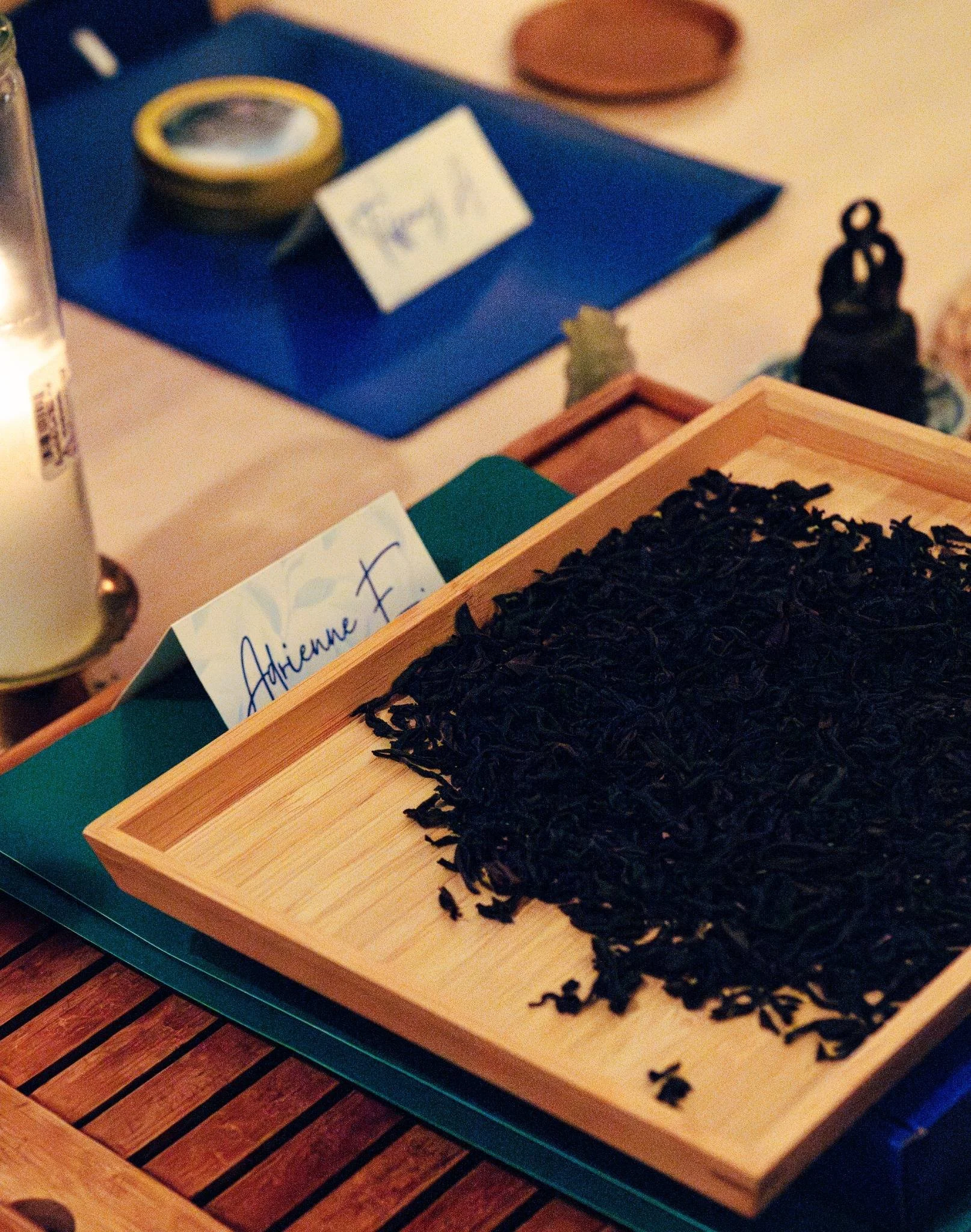 Image 5 of 5