

 Image 1 of 2
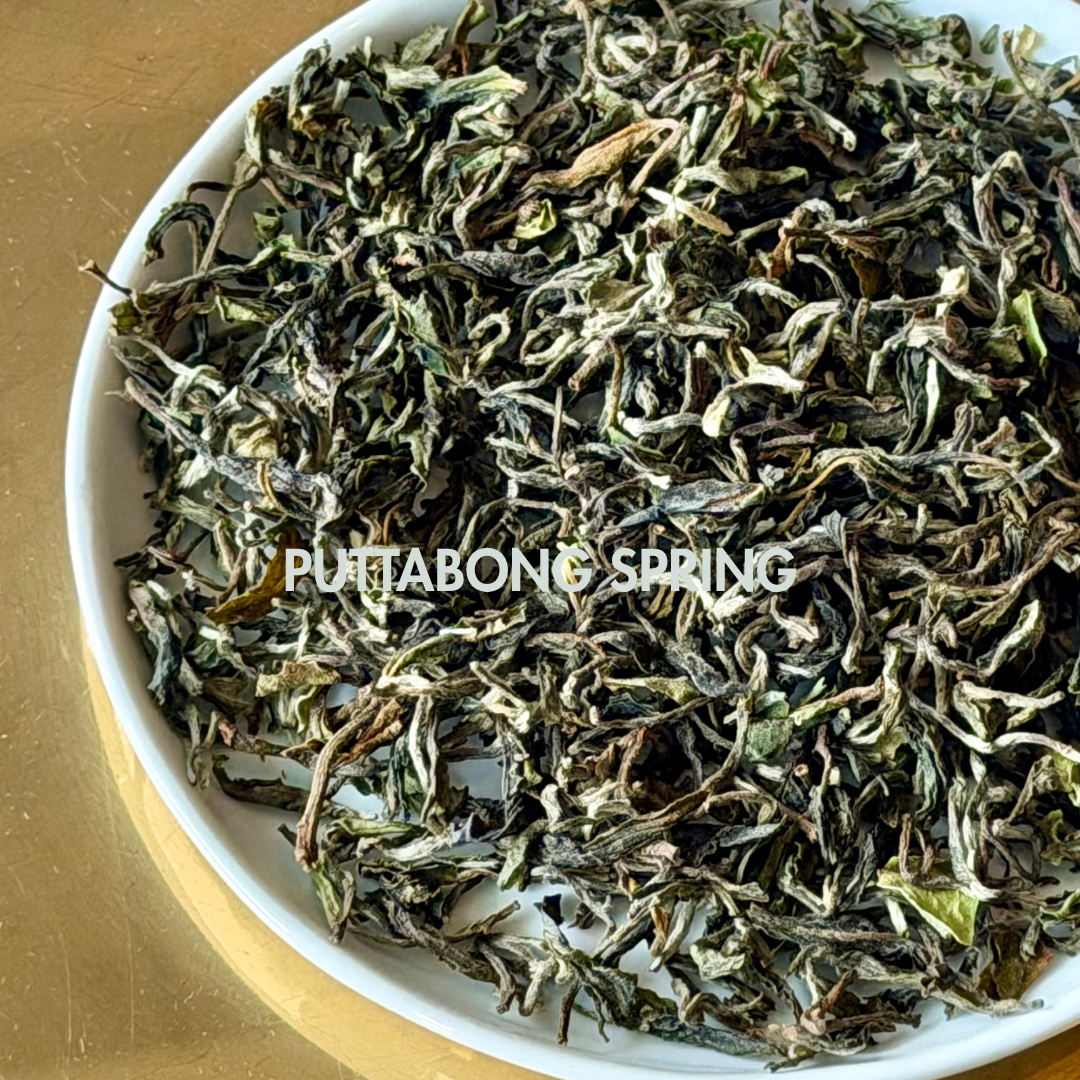 Image 2 of 2
-
Darjeeling tea is grown in the Himalayan foothills of northern West Bengal, India, in and around the district of Darjeeling. Celebrated for its fragrance, brightness, and layered complexity, Darjeeling is often called the “Champagne of Tea.”
The comparison is especially fitting because, like Champagne, Darjeeling is closely tied to place. Authentic Darjeeling tea comes from designated tea gardens within the region, where elevation, cool mountain temperatures, mist, rainfall, slope, cultivar, season, and processing all shape the character of the cup.
Commercial tea cultivation in Darjeeling began in the nineteenth century with the introduction of Chinese tea plants into the Himalayan hills. The region proved particularly well suited to Camellia sinensis var. sinensis, and over time individual estates developed their own distinctive plant material, garden practices, and processing traditions.
Darjeeling teas are traditionally understood through their seasonal harvests, known as flushes.
First Flush, harvested in spring after winter dormancy, is prized for its light, lively character. These teas are often floral, fresh, citrusy, and delicately fruity, with notes that may suggest green almond, herbs, stone fruit, honey, and tender vegetation.
Second Flush, harvested later in the season, is generally deeper and more developed, often showing ripe fruit, warm florals, greater body, and the distinctive muscatel character for which Darjeeling is famous.
Later harvests tend to become fuller, warmer, and more robust.
Although Darjeeling is most commonly associated with black tea, the region also produces green, white, oolong-style, and experimental teas. The character of each tea can vary significantly by estate, elevation, cultivar, harvest, and processing.
That is part of what makes Darjeeling so compelling: it is not one flavor, but an expression of place, season, and craft.
-
Puttabong Tea Estate, historically known as Tukvar, occupies an important place in the development of Darjeeling tea. Tea was planted at Tukvar in 1852, during the earliest period of organized tea cultivation in the Darjeeling hills. Historical accounts place Tukvar alongside Steinthal and Alubari among the pioneering experimental gardens established as the British began testing whether tea could be commercially cultivated in the region.
Located near Darjeeling town, Puttabong stretches across a dramatic range of elevations, from approximately 500 to 6,500 feet above sea level. This considerable variation in elevation creates multiple growing environments within a single estate, with differences in temperature, exposure, moisture, and the speed at which the tea plants develop.
The garden became part of the larger story of Chinese tea material adapting to the Himalayan environment. Early Darjeeling cultivation relied heavily on Camellia sinensis var. sinensis, whose smaller leaves and tolerance for cooler conditions proved especially suited to the mountain climate. Tea plants grow more slowly under these cooler conditions, particularly during the early spring, allowing the first new shoots of the year to develop the aromatic intensity associated with fine Darjeeling First Flush.
Puttabong in Spring
First Flush is the first significant harvest after the slower winter season. At Puttabong, as throughout Darjeeling, these early leaves can produce teas that are strikingly different from the dark, fully oxidized black teas many people associate with India.
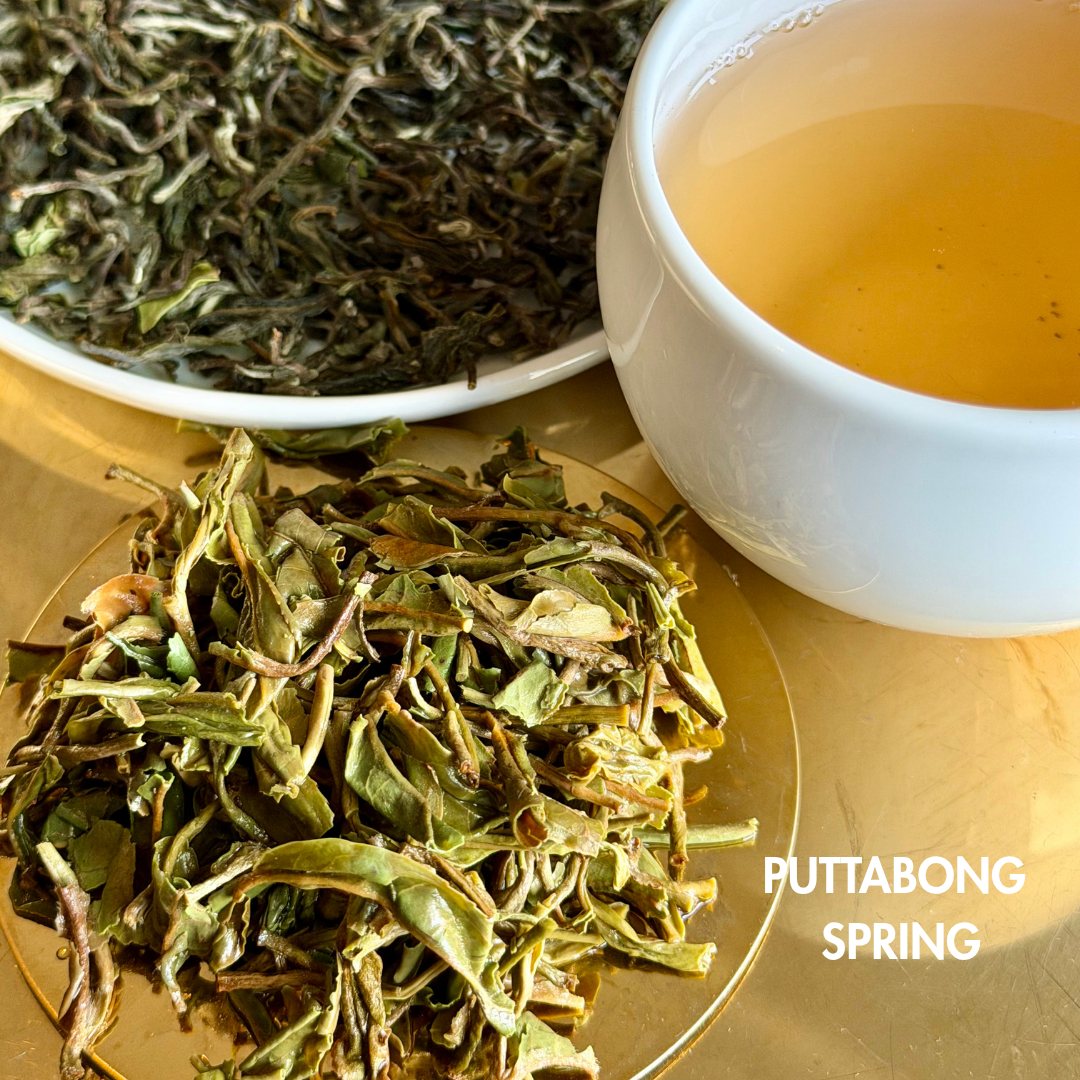
The finished leaves often retain green, olive, silver, and brown tones, while the liquor may be luminous gold or pale amber. The cup can show fresh flowers, citrus, tender herbs, green fruit, stone fruit, honey, and a gentle mineral or vegetal character, supported by the lively structure characteristic of spring Darjeeling.
Rather than being defined simply by strength, fine First Flush Darjeeling is prized for aroma, transparency, texture, and the interaction between sweetness and gentle astringency.
Our Puttabong Spring is an opportunity to taste one of Darjeeling's historically significant gardens through a particular season and harvest—not simply “Darjeeling tea,” but tea from a specific place at a specific moment.
Why Estate Matters in Darjeeling
The name of the estate on a Darjeeling tea is more than provenance.
Darjeeling's recognized tea gardens occupy different valleys, slopes and elevations throughout the Himalayan foothills. Even within a relatively small geographical region, variations in altitude, slope orientation, rainfall, temperature, soil, shade, cultivar and garden practice can create meaningful differences between teas.
Season compounds those differences.
A Puttabong tea harvested during the first weeks of spring will not necessarily resemble a Puttabong harvested during Second Flush. Likewise, two First Flush teas produced by different gardens during the same year can taste distinctly different.
-
Tea plants grew naturally in parts of northeastern India long before large-scale commercial tea cultivation developed. Indigenous communities in the region had relationships with local tea plants before the establishment of the colonial tea industry.
During the nineteenth century, the British East India Company sought to develop tea production within British-controlled India as an alternative to dependence on Chinese tea. The discovery and commercial recognition of indigenous tea plants in Assam became central to that effort.
Large plantations were subsequently established across Assam and later in other regions including Darjeeling, the Nilgiris, Kangra, Dooars, and Terai.
Indian tea therefore developed through several overlapping histories: indigenous plant knowledge, colonial agriculture, imported Chinese tea material and processing knowledge, local cultivars, plantation labor, trade, and the adaptation of tea to dramatically different climates and landscapes.
By the late nineteenth and twentieth centuries, India had become one of the world's major tea-producing countries.
Although Indian tea was historically exported primarily as black tea, contemporary Indian tea production is far more diverse. Producers today work with black, green, white, oolong-style, smoked, handcrafted, experimental, and specialty teas, alongside the high-volume teas that continue to form a major part of the global tea trade.
To understand Indian tea fully, it is useful to move beyond the idea of a single national style. Assam, Darjeeling, Kangra, Nilgiri, Sikkim and other growing regions have distinctly different climates, plant material, histories, and sensory identities.
-
Rich in Antioxidants: Helps reduce oxidative stress and promote overall health.
Digestive Aid: Known to aid in digestion and soothe the stomach.
Stress Reduction: The act of brewing and savoring the tea, along with its comforting aroma, can help reduce stress.
Sustained Energy: Contains moderate caffeine levels, providing a gentle and sustained energy boost.
-
Darjeeling teas are prized for their aromatic complexity, delicate structure, and clarity in the cup. They are best prepared with water below a full boil so that their floral, fruity, and fresh vegetal notes remain expressive without becoming overly astringent.
Recommended preparation
Use approximately 3 grams of tea per 8 ounces of water.
Heat fresh, filtered water to 170–185°F / 77–85°C. Lighter and more delicate spring teas generally perform beautifully toward the lower end of this range, while fuller or more structured lots may benefit from slightly hotter water.
Steep for approximately 3 minutes, then strain completely.
Darjeeling can often be steeped again. For a second infusion, increase the steeping time slightly and adjust the water temperature according to taste.
We recommend first tasting fine Darjeeling tea without milk or sweetener in order to experience its natural aroma, texture, sweetness, fruit, florality, and characteristic finish.
Because whole-leaf teas vary by harvest, garden, cultivar, and processing style, these instructions should be considered a starting point rather than a fixed formula.
Cold Steeping Instructions
Cold steeping involves combining tea and cold water, allowing it to steep over an extended period. This method is ideal for green teas, white teas, light to mid oxidized oolong teas, and some botanicals.
Measure:
Use 1 gram of tea per 2 oz of water.
Combine:
Place tea leaves in a vessel and add cold, filtered water based on the ratio.
Steep:
Refrigerate and steep for 4 to 24 hours. Use less tea for longer steep times to avoid over-extraction.
Strain and Serve:
Strain the tea leaves and serve over ice or as is.
Enjoy:
Relish the refreshing and flavorful cold-steeped tea, perfect for any time of the day.